
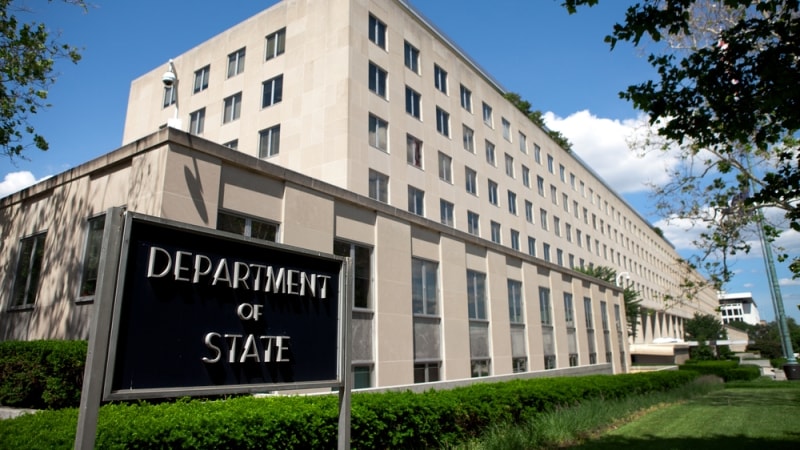
The State Department announced on Thursday it will make $200 million in foreign assistance funding available to expand access to artificial intelligence (AI)-powered, low-cost smartphones across the Indo-Pacific region under the new “Edge AI” package.
The department is seeking statements of interest from mobile network operators and original equipment manufacturers to support the distribution of affordable, high-performance smartphones in designated Indo-Pacific markets.
Beyond improving regional competitiveness for next-generation smartphones, the funding aims to support widespread access to developer tools and AI innovation, the State Department said.
The initiative aligns with the Trump administration’s AI Action Plan, which directed the departments of Commerce and State to work with industry to export “secure, full-stack AI export packages” to U.S. allies.
The White House said that stack includes hardware, models, software, applications, and standards.
The Edge AI package for the Indo-Pacific is designed to promote the use of smartphones running on trusted operating systems – such as Android and iOS – to ensure that “the next billion internet users there are integrated into an open, interoperable, and innovation-forward software ecosystem,” the State Department said.
“This initiative accelerates the Pax Silica vision of a flourishing, interconnected Indo-Pacific by empowering millions with developer tools of AI innovation and entrepreneurship,” the State Department said.
“It also provides a market-based alternative to high-risk vendors, offsetting the price distortions of untrusted providers while promoting a trusted AI software stack – a critical component of U.S. efforts to ensure that the digital infrastructure of our partners remains secure, autonomous, and free from coercion,” the department added.
The announcement comes as the administration pushes to operationalize the AI Action Plan’s export provisions. In September, White House Office of Science and Technology Policy Director Michael Kratsios told Congress that exporting the AI technology stack is the most important part of the plan.
Kratsios said that “it’s incumbent on the U.S. government to help promote these technologies broadly, so that when the [People’s Republic of China] has the capacity to actually have full chips themselves, [U.S. chips are] already there and already around the world.”
He added that executing on that strategy would require “working hand in glove” with the private sector.
Interested developers and manufacturers have until May 20 to submit proposals, with awards subject to congressional appropriations, the State Department said.