
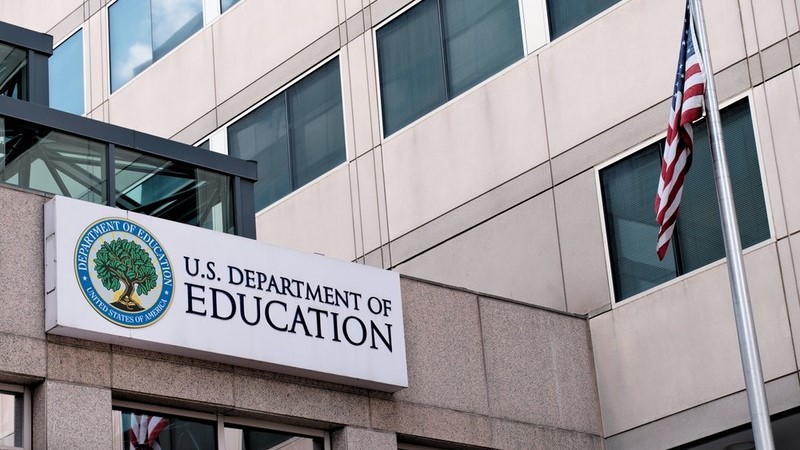
The Department of Education finalized a policy on Monday that prioritizes artificial intelligence (AI) initiatives in discretionary grant competitions, following feedback from more than 300 public comments on the proposal first issued last year.
While there were few changes to the original proposal, the final rule gives preference to programs that “promote the appropriate integration of AI into education,” including efforts to train educators, expand student exposure to AI technologies, and build workforce-ready skills.
The policy creates a supplementary grantmaking priority that agencies can apply across discretionary programs, steering funding toward projects that embed AI and computer science into curricula, expand access to AI certifications, and use AI tools to personalize learning and improve student outcomes. The department also emphasized AI’s role in streamlining administrative functions and improving school operations.
In its final notice, the department said many commenters supported the proposal, citing AI’s potential to prepare students for a technology-driven workforce and praising federal leadership on AI literacy.
At the same time, the department acknowledged significant opposition from stakeholders who warned that AI use in classrooms remains untested and could pose risks to students’ cognitive and academic development.
Some commenters urged the department to halt AI adoption in schools until the technology is proven safe and effective. Others called for stronger federal guardrails around privacy, security, and parental consent, including requirements for vendor vetting and data protections.
The department declined to impose new federal mandates in those areas, stating that decisions on privacy, security, and implementation are best handled at the state and local levels. It similarly stopped short of establishing national standards for age-appropriate AI instruction, though it updated its final rule to emphasize the importance of tailoring AI use to student age groups and investing in teacher training.
“The Department must provide our Nation’s youth with opportunities to learn how to use AI technology effectively to enable them to be competitive in a rapidly evolving technical workforce,” the Education Department said in its latest notice.
“Educators would play a critical role in using AI as a tool in ways that expand access to high-quality learning opportunities that connect with student interests,” it added.
The department also responded to calls for stronger ethical safeguards and bias testing by reinforcing that existing federal laws and requirements already apply to AI use in education. It declined to add new compliance mandates but revised the policy to highlight ethical considerations and responsible deployment.
In response to feedback on accessibility, the department updated the rule to incorporate universal design principles, emphasizing that AI tools should support students with disabilities and underserved populations. It also broadened its definition of AI literacy to include ethics, critical thinking, and the societal impacts of AI, while keeping the framework flexible for local implementation.
The final rule adds language recognizing AI’s potential to improve efficiency and program outcomes, signaling that grant reviewers may weigh both educational impact and operational benefits when evaluating proposals.
Expanding the adoption of AI into educational settings and bolstering AI-related education and literacy has been a priority of the Trump administration. Last year, President Donald Trump signed an executive order directing a new task force on AI education and the creation of public-private partnerships to provide resources for K-12 AI education.
In July 2025, the administration announced that over 60 companies joined the White House’s pledge to provide K-12 students with those resources, which include funding and grants, curriculum and materials, and technology and tools.