
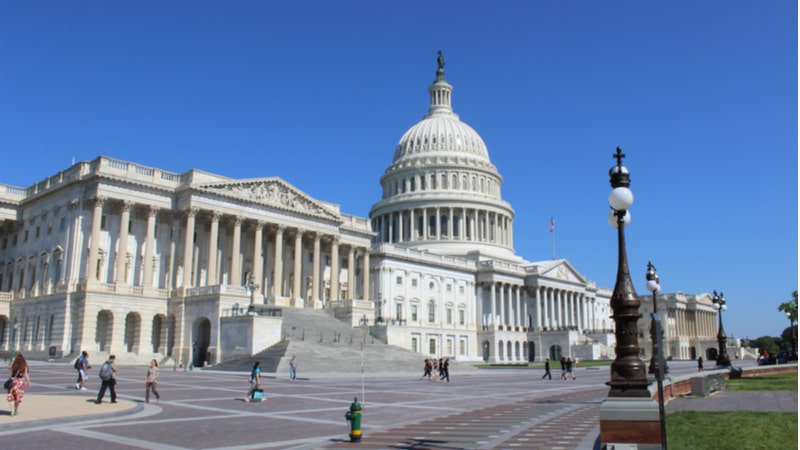
Congress is halfway through approving government funding for the current budget year that began Oct. 1, moving closer to meeting an end-of-month deadline to avert another lapse in federal funding.
Lawmakers are working to complete the passage of all 12 annual spending bills for fiscal year (FY) 2026.
On Thursday, the Senate sent three funding bills to the president – Commerce-Justice-Science, Interior-Environment, and Energy-Water – after approving the package by a broadly bipartisan 82-15 vote. That brings the total to six of the 12 bills that have now cleared both chambers.
The Agriculture, Military Construction-VA, and Legislative Branch measures became law late last year as part of the package that ended the government shutdown.
Congress has about two weeks to pass the remaining bills covering Financial Services, National Security-State, Defense, Labor-HHS-Education, Transportation-HUD, and Homeland Security.
However, the path to full funding remains uncertain as partisan tensions flare over the Trump administration’s immigration policies, particularly involving Immigration and Customs Enforcement, an issue expected to require further negotiations.
Earlier this week, the House approved the National Security-State and Financial Services appropriations bill by a 341-79 vote.
Tech details in the funding package
The $180 billion funding package includes $5 million for the Technology Modernization Fund, to remain available until expended. The provision comes after the fund expired last month for the first time since its creation in 2017, freezing nearly $200 million for federal technology projects.
Lawmakers also agreed to $1.4 million for the General Services Administration’s Office of Technology Policy and Initiatives.
The agreement also largely rejects major spending cuts proposed in the White House’s FY 2026 budget request, instead making modest reductions across multiple agencies.
The package trims funding for the departments of Justice, Interior, Commerce, and Energy, as well as the Environmental Protection Agency, the National Science Foundation (NSF), and NASA. NSF would see nearly a 4% reduction, rejecting a proposed cut of about 57%. NASA would receive about $24.43 billion, a nearly 2% decrease from current spending, while lawmakers rejected proposals to cut its science budget by nearly half and terminate dozens of missions.
The Energy Department’s Office of Science would receive a $160 million increase, about 2%, instead of a more than $1 billion reduction proposed by the administration. Funding for the National Institute of Standards and Technology would rise to roughly $1.8 billion, including $55 million for artificial intelligence research and expanded work on AI standards, quantum information science, and cybersecurity.
The legislation also limits unilateral workforce and organizational changes by federal agencies. It would bar agencies from reprogramming funds to create or eliminate programs, relocate offices, or reduce staffing or funding for a program by more than 5% without congressional approval.