
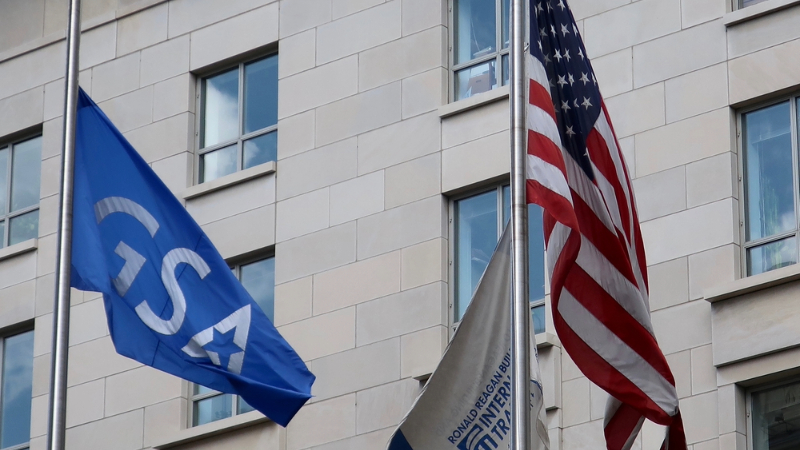
The General Services Administration’s (GSA) centralized travel management system will connect with all 124 federal civilian agencies in the next 18 months and include mobile access, a GSA Federal Acquisition Service (FAS) official said Tuesday.
GSA’s GO.gov was unveiled in July as part of the OneGov initiative to replace existing federal travel and expense platforms with a single, shared solution for civilian federal agencies, eliminating duplicative contracts and agency-by-agency management.
Carolyn Meza, the acting executive director for the FAS’s Office of Travel, Employee Relocation and Transportation, said that all civilian agencies will be connected to the travel management solution within the next 18 months while speaking at the SAP Public Sector Summit in Washington.
GO.gov was slated to be launched in November, according to GSA’s July announcement.
Right now, Meza said that GSA is working to integrate with 56 financial management systems and up to 10 travel management companies. “We’re working through all of the issues on that now, because we will be the first shared system for all federal government [agencies],” Meza explained.
While they are working through the details to get the system up and running, Meza shared more details on what agency personnel can expect.
“We are bringing to government a really, truly modernized solution,” Meza said, explaining that the system is more feature-heavy than the federal government’s current Concur cloud-based spending management platform.
“We’re going to have, for the first time ever, a government-wide data lake … We’re using MuleSoft to integrate with all the financial systems. We have Evergreen and Clock features – all of these great products that the government doesn’t [currently] have to build and maintain as these companies iterate and change,” Meza said.
That system will serve an estimated 2 million travelers across government once it is live, according to Meza.
GO.gov is under a 15-year contract with IBM, which will build and operate the new platform to integrate with travel management companies and manage booking, authorization, expenses, and reporting.
Beyond improving efficiency for federal employees, Meza said that GO.gov will also improve audit processes by integrating government charge cards into the system so that an automatic expense report is created for each employee.
“It’s going to save a lot of time, and, from the agency side, spot errors, fraud, waste, and abuse,” Meza said.
For agencies submitting trip reports – an annual summary of where people went and how much was spent – Meza explained that GO.gov will alleviate administrative burden by using AI to automate audit checks and then use that information to strike better negotiations with vendors.
GSA is also coming out with a mobile option in 2026 so that employees can access expense reports or bookings from their phones, and so that supervisors can also give approvals from their mobile devices.
“It’s just really going to make things much better,” Meza said.