
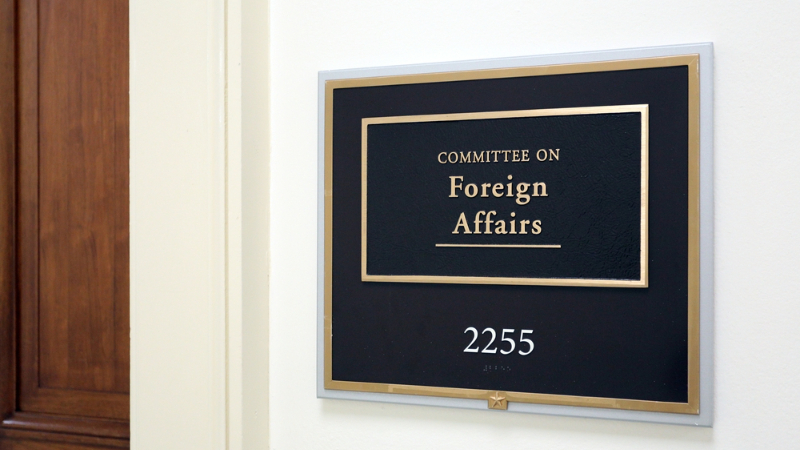
The House Foreign Affairs Committee aims to codify “pretty much all parts” of the Trump administration’s Artificial Intelligence (AI) Action Plan in the coming months, according to Rep. Brian Mast, R-Fla.
Mast, who chairs the committee, said the panel plans to quickly codify key elements of the AI Action Plan to implement export controls aimed at blocking Chinese military end users and to prioritize U.S. and allied access to advanced AI chips.
“We want American companies and American-allied companies to be the recipients of the highest tech first, and then not to have to compete with Chinese companies in order to get their hands out of it,” Mast said during the Information Technology Industry Council’s Intersect policy summit.
“You have China looking to buy literally millions of chips … they are working to be in the space, to compete and overtake it … They are getting their hands on anything that they can; to advance Huawei, to advance their other companies, not to put them at parity, but to put ours out of business,” Mast added.
The White House’s AI Action Plan is a sweeping federal strategy to maintain and extend U.S. leadership in AI – and win the global AI race – by accelerating innovation, building out domestic AI infrastructure, and leading AI diplomacy and export efforts.
On export controls, the action plan calls for tougher U.S. controls on AI compute by tightening enforcement, tracking advanced chip shipments to prevent diversion, and closing semiconductor manufacturing loopholes by extending controls to critical component subsystems.
Beyond codifying some of those export controls, Mast said more needs to be done to support the U.S. workforce and energy sector to ensure that the United States can maintain its lead.
“[China does not] have the capability to compete [with us], but they want to compete,” Mast said about U.S. manufacturing and innovation capabilities.
“But they’re beating the socks off of us in energy,” he acknowledged, adding that “means that needs to be a place where we take ourselves from a liability to an advantage, and that has to happen domestically or through our allied partnerships … but one way or another, we have to overcome … those challenges, or we fall behind.”