
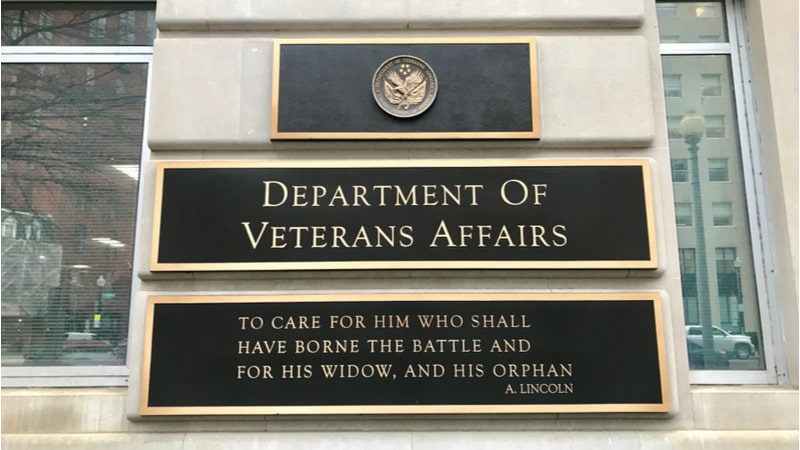
Charles Worthington, the chief technology officer (CTO) and chief artificial intelligence (AI) officer (CAIO) at the Department of Veterans Affairs (VA), announced on Thursday that he is leaving the agency.
Worthington, who first joined the VA in May 2017, said in a March 12 LinkedIn post that “the time is right for me to step down” as VA CTO and CAIO.
“I came to government to close the gap between what the best companies in the world were doing with technology and the way our government delivers services. I’m proud to say our team made a dent,” he wrote.
A VA spokesperson told MeriTalk that starting on March 16, George Waddington will serve as acting CTO, “bringing his experience as a senior executive to represent the team across VA leadership and ensure the Office of the CTO continues to have a strong voice during this transition.”
Kimberly McManus, the agency’s deputy CTO of AI, will step in as acting chief AI officer and deputy CTO. The VA spokesperson said McManus will help “lead the technical direction and day-to-day operations of the CTO delivery teams while continuing the important AI transformation work underway across OIT.”
During Worthington’s tenure at the VA, he helped modernize VA.gov, launch the VA’s flagship mobile app, and scale AI across the VA workforce.
In his post, Worthington said he helped take generative AI access from less than 1% of VA employees to 100% in a single year. As for scaling AI across VA’s clinical workforce, he helped deploy clinical decision support tools to 110,000 clinicians and ambient AI scribes to over 2,500 providers.
In an interview with MeriTalk last year, Worthington said the number of AI use cases in the VA’s inventory increased by over 100 from 2023 to 2024.
“We’re focusing on trying to figure out what are some of the VA’s most pressing challenges and then line up where we think AI can help with those challenges,” Worthington told MeriTalk in March 2025.
“The ultimate payoff is going to be basically equipping people to just do their jobs with a lot more effectiveness and efficiency,” he added.
Worthington said in his LinkedIn post that when he joined the VA, “the Office of the CTO didn’t exist, and the VA Digital Service team didn’t have an institutional home. Today, our 100+ engineers, designers, architects, and PMs have built something I’m immensely proud of, and I will be rooting for every one of them.”
Worthington first joined the government in 2013 as part of the Presidential Innovation Fellows program. He then served as a senior advisor to the U.S. chief technology officer, helping to co-create the U.S. Digital Service (USDS) in the aftermath of the HealthCare.gov crisis.
He then went on to serve at USDS for nearly three years before joining the VA.
Worthington did not indicate where he’s heading next, but said, “Serving at VA has been the most rewarding chapter of my career so far.”
“We are in the early innings of the most important technology shift since the Internet. The deep integration of AI into the systems that power how we live, work, and experience critical services has barely begun, and I plan to be building at this frontier at scale,” he wrote.